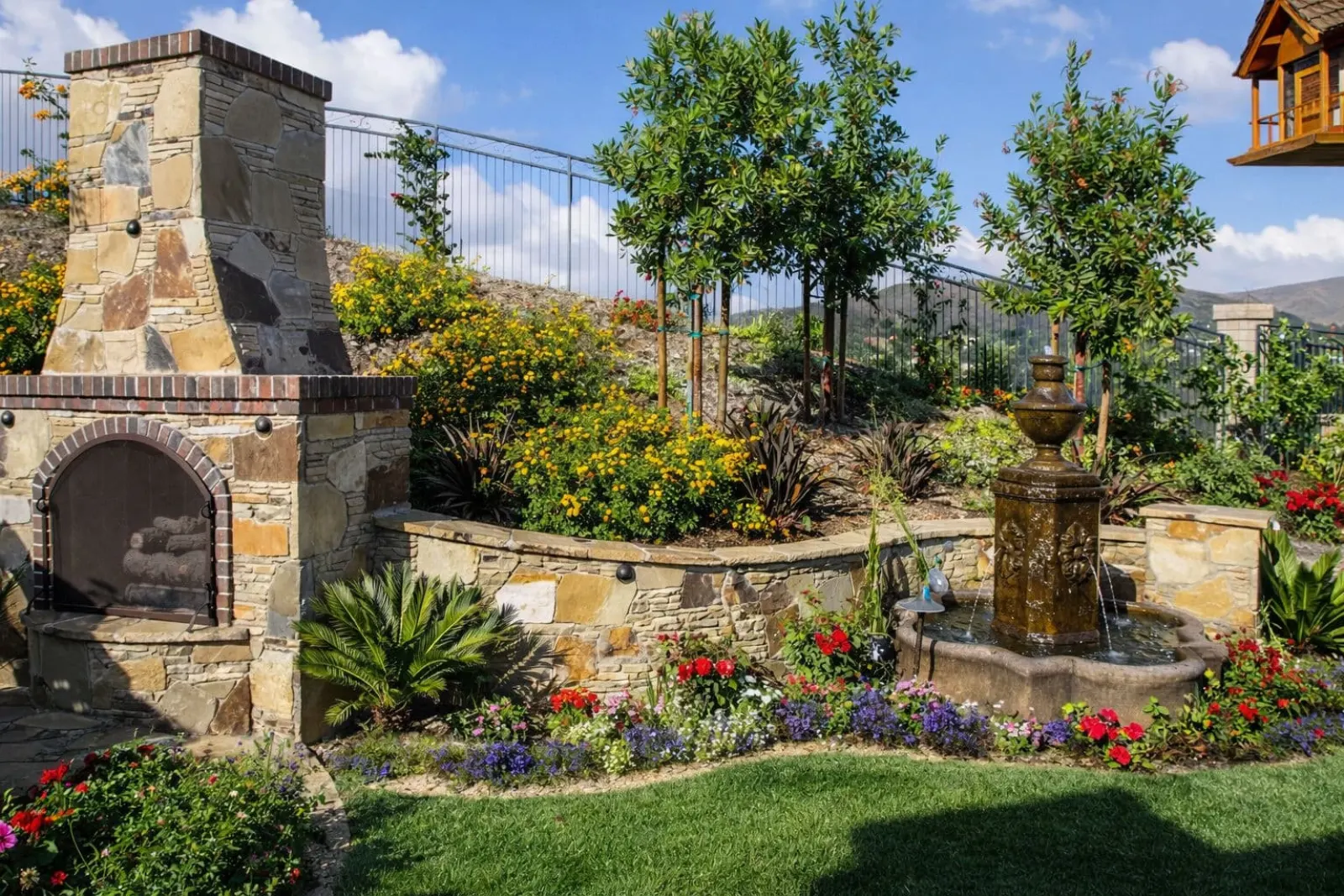
Whole-Property Landscape Design
Where this approach falls short
The page most companies in our position do not write.
Hiring one company to design and build an entire property removes the seams, the coordination burden and the argument about whose fault something is. It is not free of downsides, and several of them are real. Anybody choosing this way of working should choose it knowing what it costs as well as what it buys.
You are concentrating your risk in one company
With four contractors, one failing badly is a bad phase. With one company running everything, one failing badly is the whole project. That is a genuine argument against this model and it does not go away because we are the company saying it.
The mitigation is the ordinary one: check the license, look at work that is several years old rather than several weeks old, and talk to somebody whose project went wrong rather than only to the happy references.
A specialist can beat a generalist at the specialist thing
A company that builds nothing but pools, all year, will know things about pools that a landscape company does not. The same is true of a stonemason who does nothing but stone. What one company buys is coordination, not superiority at every individual trade, and claiming otherwise would be marketing rather than truth.
The headline number is often higher
The headline number is often higher, because a single properly scoped price includes the grading, the drainage, the spoil, the access protection and the make-good that separate quotes push onto somebody else. It reads as more expensive, because it is more complete. Whether it ends up costing more is a different question and the honest answer is: usually not, and not always.
It suits some projects and not others
Replacing a lawn, fixing an irrigation zone or repairing one wall does not need a whole-property approach and should not be sold one. A great deal of our own work is a single element on an otherwise finished property, and that is a perfectly good way to hire us.
What the whole-property approach does do
The whole-property approach gives one owner of the grade, the levels, the services and the sequence. One company accountable for how the parts meet. No seam at which the order of the work can break. Those are worth having, and they are not the same as being better at everything.
Questions people actually ask
So when should we not hire one company for everything?
You should not hire one company for everything when the work is a single element on an otherwise finished property, when you already have a general contractor coordinating trades well, or when a specialist requirement genuinely dominates the project. In those cases the coordination is not the problem being solved.
Why publish this?
Because the alternative is a client who chose this way of working without understanding the trade-off, and finds out at the point when it matters. We would rather be the company that said it and got the smaller job.
Does this mean you take small projects?
Yes. A failing retaining wall, a pool renovation, a badly zoned irrigation system: a great deal of the work is one part of a property.
The rest of the guide
Whole-Property Landscape Design, one question per page.
- Whole-Property Landscape Design: the complete guideThe hub page: what it is, the sequence, and what one company changes.
- The order of the workNot a scheduling preference. Every stage decides where water goes for the one after it.
- Four contractors, and the seamsThe normal way a property gets built, and the specific places it comes apart.
- Services before concreteThe cheapest decisions on the whole project, and the ones most often skipped.
- Drainage decides everythingThe unglamorous half of the budget, and the half that is still right in ten years.
- The pool inside the planThe shell is rarely the problem. Where it sits almost always is.
- Phasing a whole propertyAlmost nobody does it all at once. Doing it in the right order is what makes that cheap instead of expensive.
- What a 3D model settlesChanges on screen cost an afternoon. The same change after a footing is poured costs a demolition.
- One scope, one priceSix quotes for one property are usually six different projects, which is why they cannot be compared.
- The handoverA landscape is a system somebody has to run after we leave. Being told how is part of the work.
Tell us about the property
Send a few lines about what you have and what you want. We will tell you what we think it takes, what order it should happen in, and whether we are the right company for it.