Fire-Resilient Landscape Design
Cost and sequencing: what to do first
Almost nobody does the whole property in one go. The order you do it in changes how much protection you have bought at every point along the way.
Fire-resilient landscape design is usually delivered in phases, because a whole property is a large project and most households do not spend that in one year. The useful question is therefore not what it costs, it is what order to buy it in, and the order is not the same as the order things appear in a garden.
The first five feet, first, every time
The first five feet is the first phase every time. Zone 0 is the smallest area on the property and the one where a given amount of money changes the most, because it removes the ignition path that most often loses a house. It can also be done as a standalone piece of work without committing to a design for the rest of the lot, which makes it the natural first phase for almost everyone.
Then the fuel paths, then the slope
Second is breaking the continuous routes fuel takes toward the building: the combustible fence running into a wall, the hedge line that connects the boundary to the house, the storage under the deck. These are cheap fixes with large effects, and they are frequently missed because none of them looks like landscaping.
Third, on a hillside lot, is the downhill face, which is the most expensive phase and usually the one that also delivers the terraces and retaining that make the property usable.
Planting last, and why that is uncomfortable
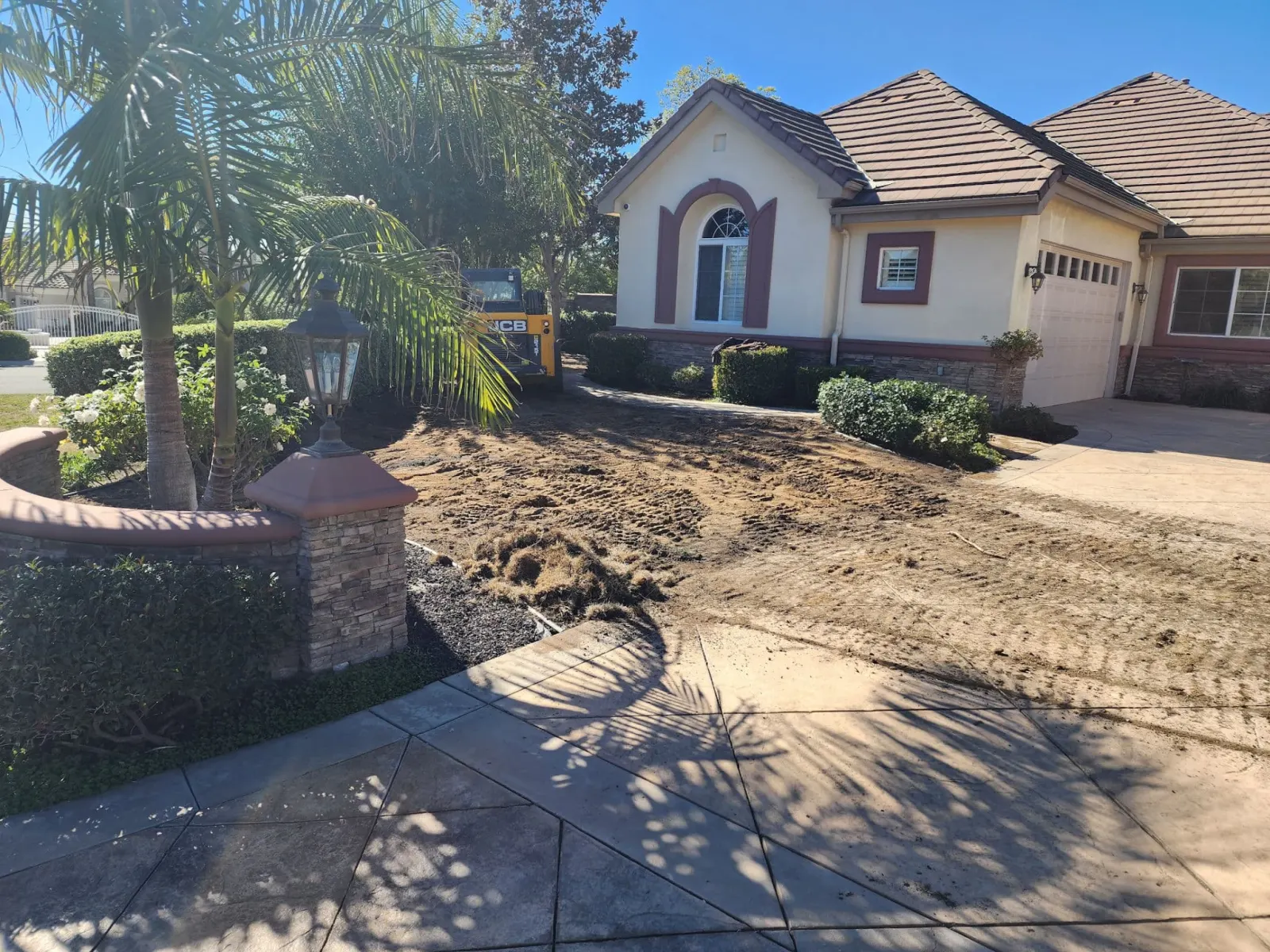
Planting is the phase everybody wants first, because it is the phase you can see. It is also the phase that depends on every other decision, and planting before the grading, the drainage, the irrigation zoning and the hard surfaces are settled means paying for the same plants twice.
What this work costs, and what we will not quote
We will not quote a price per square foot for fire-resilient landscaping, because the honest cost range is too wide for one number to mean anything. Access, slope, existing conditions and how much material has to be removed change the figure more than the size of the lot does.
We give a fixed price against a defined design, and we would rather tell you a phase is not worth doing yet than sell it to you.
Questions people actually ask
What does fire-resilient landscaping cost?
It depends far more on access, slope, and how much existing material has to be removed than on the size of the property, so a per-square-foot figure would mislead. We price a defined design for a specific address, and we phase it so the highest-value work happens first.
Can I do Zone 0 now and the rest later?
Yes, and for most properties that is the recommended order. It is the smallest area, it does not require the rest of the design to be settled, and it removes the most common ignition path.
Is it cheaper to do it with a wider landscape project?
Usually, yes. Trenching, grading and access are the expensive parts, and doing them once for both the fire work and the garden is materially cheaper than doing them twice.
Sources
Sources: CAL FIRE, Defensible Space. Requirements change and vary by address. Confirm yours with your local fire authority before relying on anything here.
The rest of the guide
Fire-resilient landscape design, one question per page.
- Fire-Resilient Landscape Design: the complete guideThe hub page: what it is, the zones, and what it changes on a property.
- Zone 0: the first five feetThe smallest zone, the one that costs a garden the most, and the one nearly everybody gets wrong.
- Plant selection and spacingThere is no fireproof plant. There are plants that are badly placed, badly spaced and badly maintained, and those are the ones that carry fire.
- Hardscape as a firebreakA path is not automatically a firebreak. Width, continuity and what sits either side of it decide whether it does anything at all.
- Irrigation and fuel moistureThe moisture in a living plant in September is a design outcome, decided by a controller somebody set in July.
- Slopes and hillside lotsA house above a slope has a different problem from a house on flat ground, and the same clearance distance does not mean the same thing.
- Insurance and HOA inspectionsWe can build a landscape that meets what an inspection asks for. We cannot promise you a policy, and anybody who does is not in a position to.
- The maintenance calendarEverything built on the rest of this site stops working within two seasons if nobody clears it.
- Rebuilding after a fireThe ground is not the ground it was. Putting the old garden back on it is how the second problem starts.
- Rebuilding in Malibu and the canyonsWhat the ground needs before anything is planted, and why the garden is the last stage rather than the first.
- Where this falls shortThis is the page most companies in our position do not write. It is here because the alternative is letting somebody believe a garden will save a house.
Tell us about the property
Send a few lines about what you have and what you want. We will tell you what we think it takes, what order it should happen in, and whether we are the right company for it.