Fire-Resilient Landscape Design
Rebuilding a landscape in Malibu and the Santa Monica Mountains
What the ground needs before anything is planted, and why the garden is the last stage rather than the first.
Malibu, Pacific Palisades and the canyons between them are rebuilding after the 2024 Franklin Fire and the 2025 Palisades Fire, and a landscape on a rebuild is a different job from a landscape on a renovation. The order changes, the soil has changed, the slope behaves differently, and the part everybody wants first is the part that has to come last.
The landscape goes in last, and that is not a scheduling preference
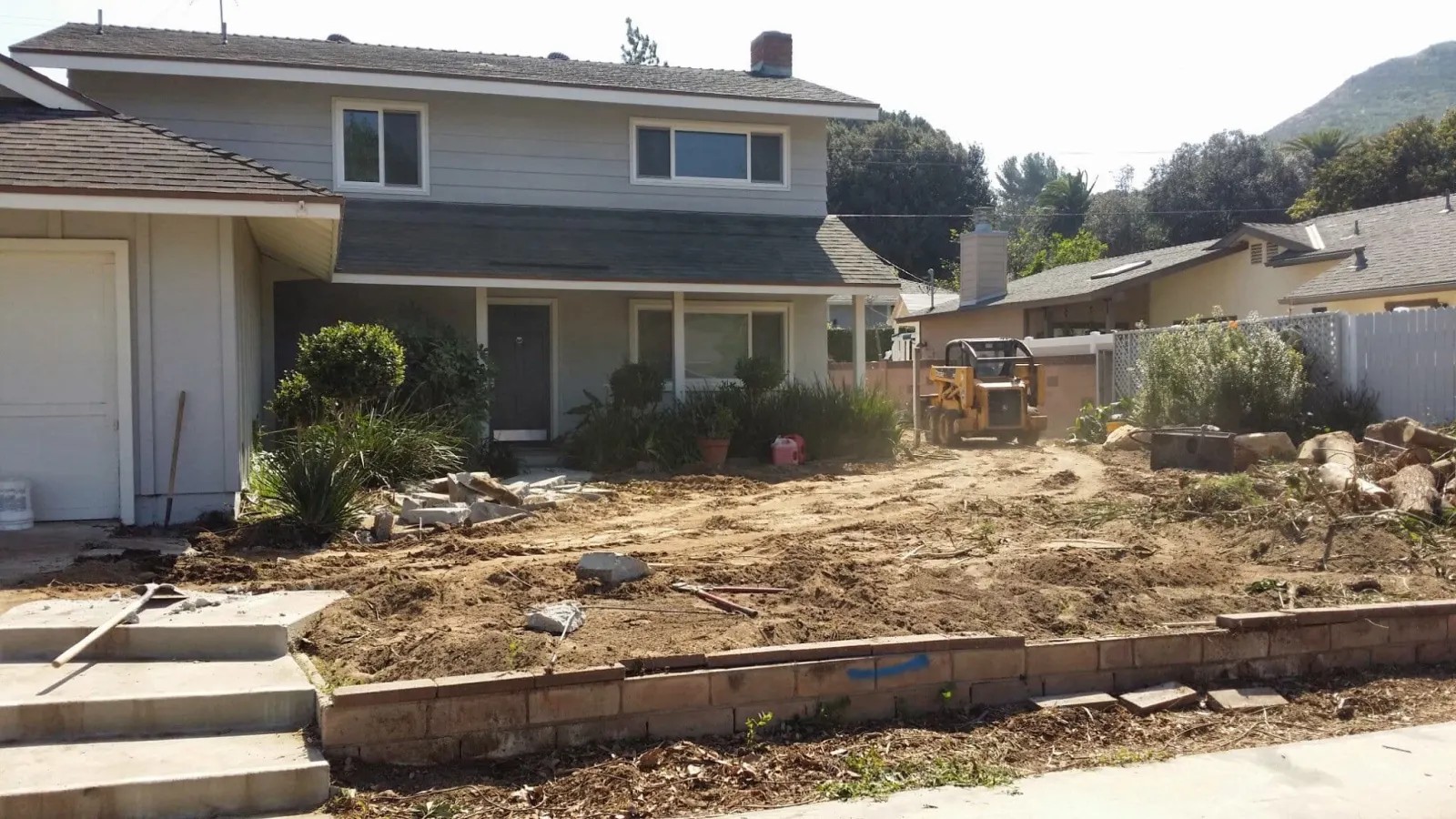
On a rebuild the landscape is the final trade, because everything before it moves earth and runs equipment across the site. Utilities, foundations, framing, deliveries and inspections all cross the ground that a garden would otherwise be sitting in, and planting into a route that a concrete truck still needs is money spent twice.
What can and should happen early is the invisible half: the grading and drainage design, erosion control on any slope, and the conduit, sleeving and irrigation mainline that have to be in before hardscape is poured. Those are cheap now and expensive later, and they are the decisions that quietly set what the finished landscape is allowed to be.
Burned ground is not the ground that was there before
Burned ground is not the ground that was there before, because fire changes soil. Organic content is gone, structure can be damaged, ash and debris are worked through the top layers, and in some soils a water-repellent layer forms that makes runoff worse rather than better. Planting into it on the assumption that soil is soil is how a replanted garden fails slowly over two seasons, long after anybody is still connecting it to the fire.
Testing rather than assuming is worth the small cost on a rebuild, and it is the one piece of site information that changes the plant list, the amendment budget and the irrigation schedule at the same time.
Slopes are the urgent item, and they run on the rain calendar
A slope that lost its root structure and surface cover moves in the first significant rain, and that deadline is set by weather rather than by a construction program. On the Santa Monica Mountains lots that make up most of this corridor, stabilization and drainage are the work that cannot wait for the rest of the design to be settled.
It is also the work that overlaps most usefully with the finished result: terracing a slope interrupts a continuous fuel face, gives level ground where non-combustible surfaces can go, and produces the usable garden that a bare bank never was.
Access decides more here than anywhere else
Canyon and coastal lots in Malibu, Topanga and the Palisades often have one narrow route in, shared with every other trade on the street and, during recovery work, with road repairs on Pacific Coast Highway and Topanga Canyon Boulevard. What can physically reach the back of a property is a real constraint on what can be built there, and it is better established at design stage than discovered on a delivery day.
Building it back more fire-resilient than it was
A rebuild is the one moment when the first five feet around the structure, the fuel paths across the property and the shape of the slope are all reachable at once. After the landscape is in, each of those becomes a separate project with its own demolition.
That is the practical argument for treating fire resilience as part of the rebuild rather than as something to add later, and it is the same method set out across the rest of this guide: the first five feet, hardscape that does structural work, slopes, and the page about where all of it falls short.
What we will not tell you
We will not tell you what a rebuild landscape costs before somebody has stood on the site, and we will not quote a schedule that depends on permits, inspections and a highway we do not control. We will not claim a landscape plan will protect the rebuilt house, and we will not promise an insurance or inspection outcome.
We are also not going to send anybody a marketing letter about this. If it is useful, the phone number is on every page of this site.
Questions people actually ask
When in a rebuild should we talk to a landscape company?
Earlier than most people do, and not because the planting starts earlier. Grading, drainage, erosion control and the conduit that has to be in before hardscape are all decided at design stage, and they set what the finished landscape can be. The planting itself is still the last thing that happens.
Do we have to replace the soil?
Not usually all of it, and not on an assumption either way. Burned soil can be structurally changed and stripped of organic content, so testing is the cheap step that tells you whether amendment, partial replacement or neither is the right answer for your lot.
Can the slope wait until the house is finished?
The rain decides that, not the construction schedule. A slope that has lost its cover erodes in the first significant storm, so stabilization and drainage are usually the one part of the landscape that cannot wait for the rest of the design.
Do you work in Pacific Palisades and Topanga as well as Malibu?
Yes. Brooks Landscape and Design works across the Santa Monica Mountains corridor including Malibu, Pacific Palisades and Topanga, alongside its Ventura County and Conejo Valley service area. Call (805) 208-3739 and describe the property.
Sources
Sources: City of Malibu, CAL FIRE, Defensible Space, California Public Resources Code section 4291, Los Angeles County Fire Department. Requirements change and vary by address. Confirm yours with your local fire authority before relying on anything here.
The rest of the guide
Fire-resilient landscape design, one question per page.
- Fire-Resilient Landscape Design: the complete guideThe hub page: what it is, the zones, and what it changes on a property.
- Zone 0: the first five feetThe smallest zone, the one that costs a garden the most, and the one nearly everybody gets wrong.
- Plant selection and spacingThere is no fireproof plant. There are plants that are badly placed, badly spaced and badly maintained, and those are the ones that carry fire.
- Hardscape as a firebreakA path is not automatically a firebreak. Width, continuity and what sits either side of it decide whether it does anything at all.
- Irrigation and fuel moistureThe moisture in a living plant in September is a design outcome, decided by a controller somebody set in July.
- Slopes and hillside lotsA house above a slope has a different problem from a house on flat ground, and the same clearance distance does not mean the same thing.
- Insurance and HOA inspectionsWe can build a landscape that meets what an inspection asks for. We cannot promise you a policy, and anybody who does is not in a position to.
- The maintenance calendarEverything built on the rest of this site stops working within two seasons if nobody clears it.
- Rebuilding after a fireThe ground is not the ground it was. Putting the old garden back on it is how the second problem starts.
- Cost and sequencingAlmost nobody does the whole property in one go. The order you do it in changes how much protection you have bought at every point along the way.
- Where this falls shortThis is the page most companies in our position do not write. It is here because the alternative is letting somebody believe a garden will save a house.
Tell us about the property
Send a few lines about what you have and what you want. We will tell you what we think it takes, what order it should happen in, and whether we are the right company for it.