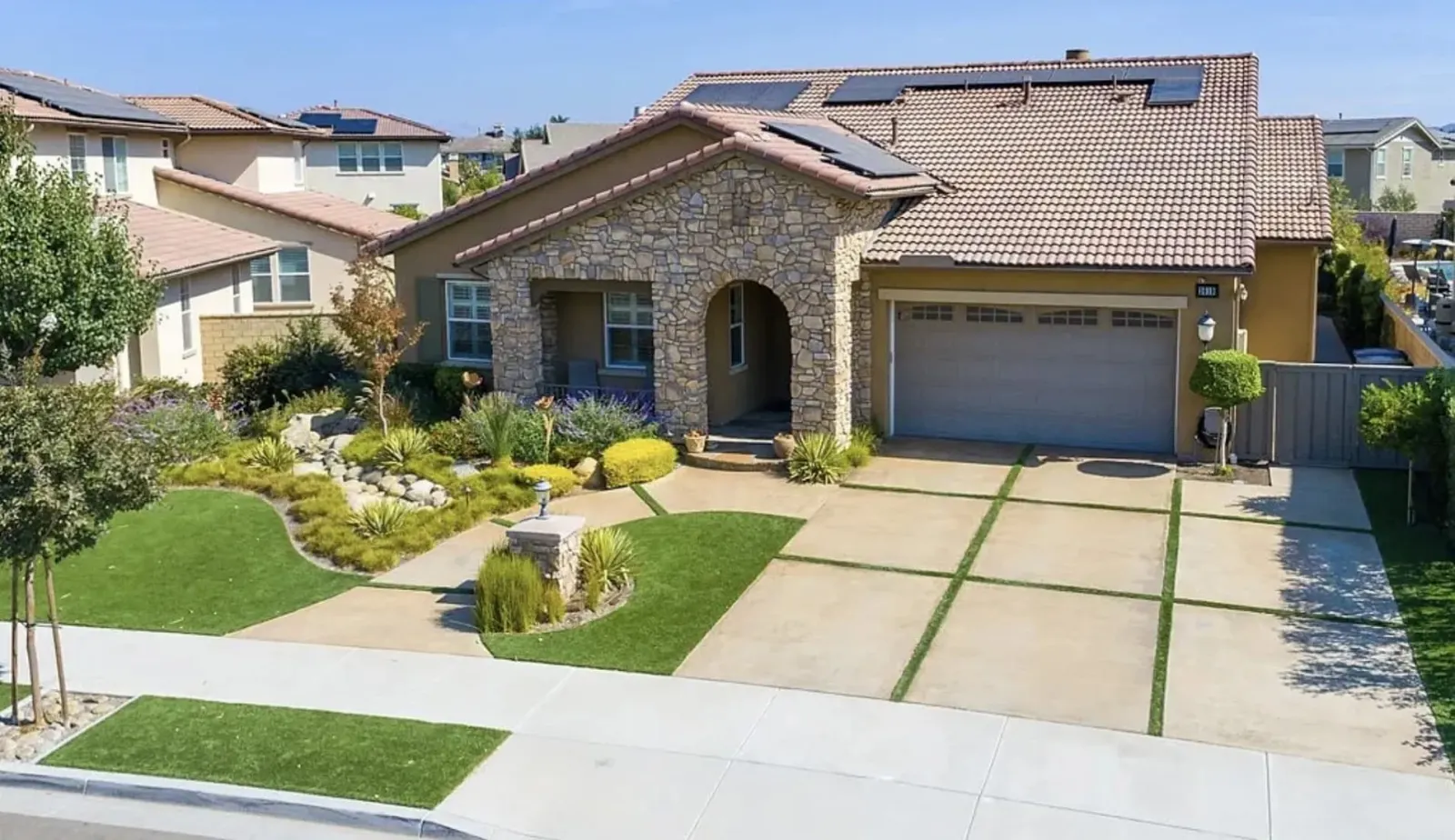
Fire-Resilient Landscape Design
Insurance and HOA inspections
We can build a landscape that meets what an inspection asks for. We cannot promise you a policy, and anybody who does is not in a position to.
Homeowners across our service area are being asked by insurers, and in some communities by their homeowner association, to show that the ground around their house has been treated. Fire-resilient landscape design is how that work gets planned and built. It is not a certification, and Brooks Landscape and Design cannot promise how any insurer, inspector or association will rule.
What an inspection is generally looking for
An inspection varies by who is doing it, and the recurring themes are consistent. What gets looked at: the condition of the first five feet around the structure, whether there is a continuous fuel path from the property boundary to the building, dead and dying material, vegetation touching or overhanging the roof, combustible material stored against or under the house, and whether the required clearance has been maintained rather than done once.
That last one matters more than people expect. Most of these requirements describe a condition to be maintained, not a job to be completed, so an inspection is a snapshot of maintenance as much as of construction.
What a landscape plan can honestly contribute
We can design and build to the standard being asked for, document what was done, and set up the planting and irrigation so that the condition is maintainable rather than a fight every August. On projects where an inspection is the driver, we will also coordinate with the inspecting party while the plan is being drawn, which is far cheaper than doing so afterward.
One of our clients came to us in exactly that position: their insurer told them they needed a wildfire certificate or they would be dropped, and the resulting work re-landscaped most of the yard. That is a real account of a project, and it is not a promise that the same outcome is available to everyone.
What we will not tell you
We will not tell you that a given scheme guarantees a policy renewal, a passed inspection, or an HOA approval. Those decisions belong to insurers, fire authorities and associations, they apply criteria that change, and a contractor who claims to control them is describing something they do not control.
If a company gives you that guarantee in writing, ask them what happens when the insurer says no.
Questions people actually ask
Can you guarantee my property will pass inspection?
No. We design and build to the standard being asked for and we document the work, and the decision belongs to the inspector, the insurer or the association. Any landscape company promising a pass is promising something outside its control.
Will you work with my insurer or my HOA directly?
Yes. We work directly with an insurer, a fire authority or an HOA architectural committee, and doing it while the design is still being drawn is far cheaper than doing it after construction. Architectural committees in Westlake Village, Calabasas and Hidden Hills all have their own submission processes, and a plan drawn with those in mind avoids a second round.
What if the requirements change after the work is done?
They do change. This is a maintained condition rather than a finished object, which is why the maintenance calendar is part of the design and not an afterthought.
Sources
Sources: CAL FIRE, Defensible Space, California Office of the State Fire Marshal, Fire Hazard Severity Zones, Ventura County Fire Department. Requirements change and vary by address. Confirm yours with your local fire authority before relying on anything here.
The rest of the guide
Fire-resilient landscape design, one question per page.
- Fire-Resilient Landscape Design: the complete guideThe hub page: what it is, the zones, and what it changes on a property.
- Zone 0: the first five feetThe smallest zone, the one that costs a garden the most, and the one nearly everybody gets wrong.
- Plant selection and spacingThere is no fireproof plant. There are plants that are badly placed, badly spaced and badly maintained, and those are the ones that carry fire.
- Hardscape as a firebreakA path is not automatically a firebreak. Width, continuity and what sits either side of it decide whether it does anything at all.
- Irrigation and fuel moistureThe moisture in a living plant in September is a design outcome, decided by a controller somebody set in July.
- Slopes and hillside lotsA house above a slope has a different problem from a house on flat ground, and the same clearance distance does not mean the same thing.
- The maintenance calendarEverything built on the rest of this site stops working within two seasons if nobody clears it.
- Rebuilding after a fireThe ground is not the ground it was. Putting the old garden back on it is how the second problem starts.
- Cost and sequencingAlmost nobody does the whole property in one go. The order you do it in changes how much protection you have bought at every point along the way.
- Rebuilding in Malibu and the canyonsWhat the ground needs before anything is planted, and why the garden is the last stage rather than the first.
- Where this falls shortThis is the page most companies in our position do not write. It is here because the alternative is letting somebody believe a garden will save a house.
Tell us about the property
Send a few lines about what you have and what you want. We will tell you what we think it takes, what order it should happen in, and whether we are the right company for it.