Fire-Resilient Landscape Design
Irrigation and fuel moisture
The moisture in a living plant in September is a design outcome, decided by a controller somebody set in July.
Live fuel moisture is one of the few things about a landscape that a homeowner can still influence in the week before a fire, and irrigation is how. In fire-resilient landscape design, a correctly zoned and correctly scheduled irrigation system is not a luxury layered on top of the fire work: it is part of it.
Why moisture changes behavior
Moisture changes how a plant behaves in a fire. A plant carrying water takes longer to ignite and burns less intensely when it does. Across a whole property that difference shows up as a slower-moving, lower-intensity ground fire rather than a fast one, which is the difference between a fire that passes and a fire that finds its way into a structure.
It is not a force field. Under extreme wind and low humidity, irrigated planting burns. The claim worth making is that it burns differently, and that difference is worth buying.
Zoning is where most systems fail
A system that waters the whole property on one schedule is either drowning the drought-tolerant planting or under-watering the areas that most need to stay green. Zones that group plants by actual water need are what make it possible to keep the areas nearest the house green through late summer without wasting water on the far end of the lot.
The zone nearest the structure is the one worth keeping greenest, which is a fire decision as much as a horticultural one.
What to do when water is restricted
Drought restrictions and fire preparation pull in opposite directions, and pretending otherwise helps nobody. The workable answer is prioritization: concentrate the available water on the zone closest to the structure, use drip rather than spray so that almost all of it reaches roots, mulch away from the building to hold what you apply, and accept a browner far end of the property.
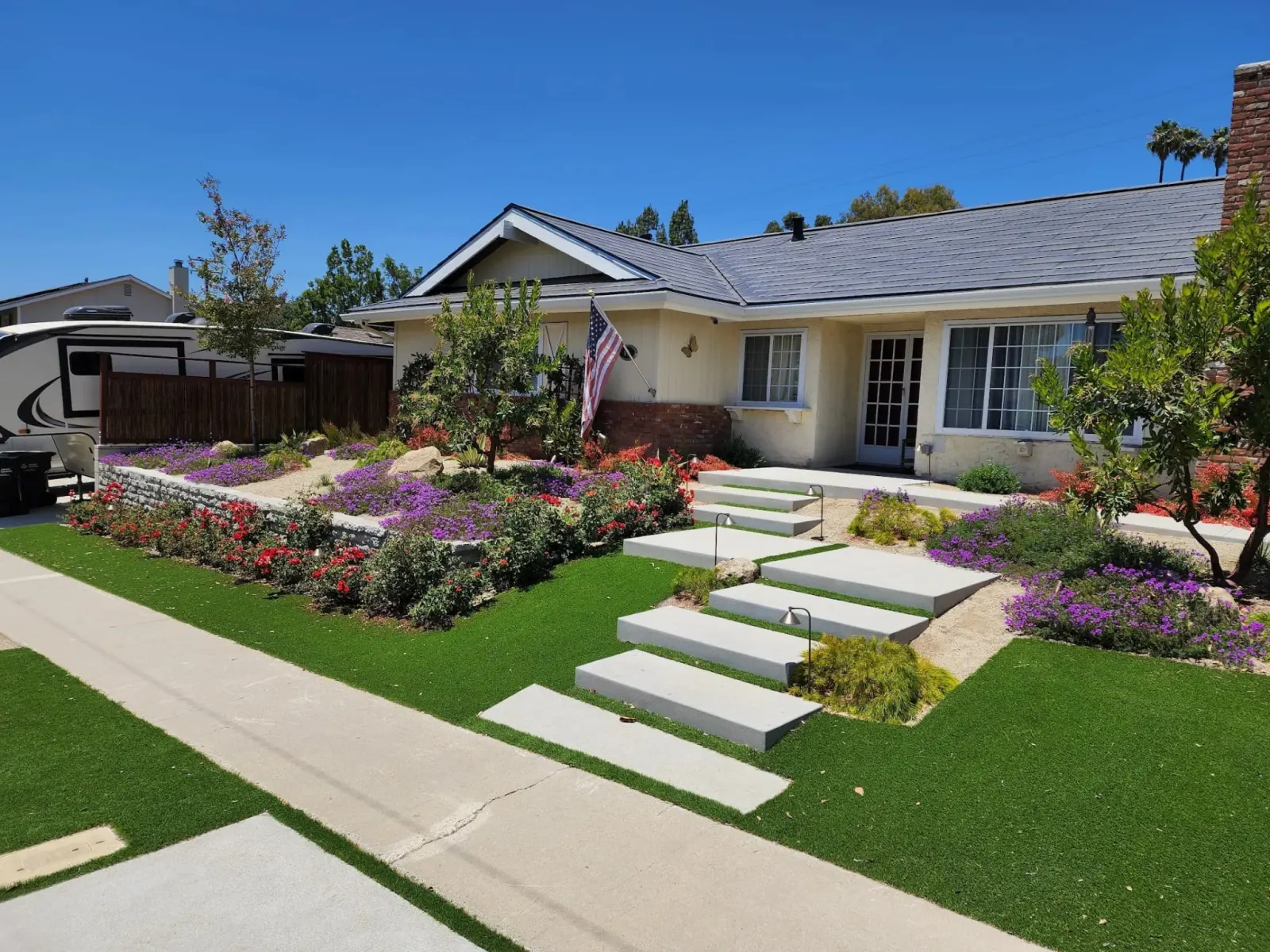
Synthetic turf and gravel are sometimes the right response near a structure precisely because they need no water at all, which makes them reliable in a year when watering is restricted.
Questions people actually ask
Should I run the sprinklers when a fire is approaching?
Ask your fire authority, not a landscape company. Running sprinklers as a fire approaches is an emergency decision governed by your evacuation instructions. Running sprinklers can drop water pressure that firefighters need, and staying behind to operate them is exactly what evacuation orders exist to prevent.
Does drip irrigation help less than spray for fire resilience?
No. Drip puts more of the water into the root zone, which is what keeps a plant carrying moisture. Spray loses a large share to evaporation and wind, particularly in inland heat.
Can I keep a green zone near the house during water restrictions?
Usually, by shrinking it. A small, tightly zoned, drip-irrigated area near the structure uses far less water than a conventional lawn and is where the water does the most good.
Sources
Sources: CAL FIRE, Defensible Space. Requirements change and vary by address. Confirm yours with your local fire authority before relying on anything here.
The rest of the guide
Fire-resilient landscape design, one question per page.
- Fire-Resilient Landscape Design: the complete guideThe hub page: what it is, the zones, and what it changes on a property.
- Zone 0: the first five feetThe smallest zone, the one that costs a garden the most, and the one nearly everybody gets wrong.
- Plant selection and spacingThere is no fireproof plant. There are plants that are badly placed, badly spaced and badly maintained, and those are the ones that carry fire.
- Hardscape as a firebreakA path is not automatically a firebreak. Width, continuity and what sits either side of it decide whether it does anything at all.
- Slopes and hillside lotsA house above a slope has a different problem from a house on flat ground, and the same clearance distance does not mean the same thing.
- Insurance and HOA inspectionsWe can build a landscape that meets what an inspection asks for. We cannot promise you a policy, and anybody who does is not in a position to.
- The maintenance calendarEverything built on the rest of this site stops working within two seasons if nobody clears it.
- Rebuilding after a fireThe ground is not the ground it was. Putting the old garden back on it is how the second problem starts.
- Cost and sequencingAlmost nobody does the whole property in one go. The order you do it in changes how much protection you have bought at every point along the way.
- Rebuilding in Malibu and the canyonsWhat the ground needs before anything is planted, and why the garden is the last stage rather than the first.
- Where this falls shortThis is the page most companies in our position do not write. It is here because the alternative is letting somebody believe a garden will save a house.
Tell us about the property
Send a few lines about what you have and what you want. We will tell you what we think it takes, what order it should happen in, and whether we are the right company for it.