Fire-Resilient Landscape Design
Slopes and hillside lots
A house above a slope has a different problem from a house on flat ground, and the same clearance distance does not mean the same thing.
Fire moves uphill far faster than it moves across flat ground, preheating the fuel above it as it goes. On the hillside lots that make up much of Malibu, Calabasas, Agoura Hills and the edges of Simi Valley, that single fact reorganizes the whole of fire-resilient landscape design: the downhill side of the property is where the work concentrates.
Distance measured along a slope is not distance
Clearance requirements are commonly described as a number of feet, and on a steep slope the effective protection of that distance is less than the same number on the flat, because the fire arrives faster and with more radiant heat ahead of it. Steeper slopes and downhill exposure are among the reasons local fire authorities can require more than the baseline.
The practical consequence is that a hillside property usually needs its clearance extended downhill, and that the downslope face is where budget should go first.
Terracing does two jobs at once
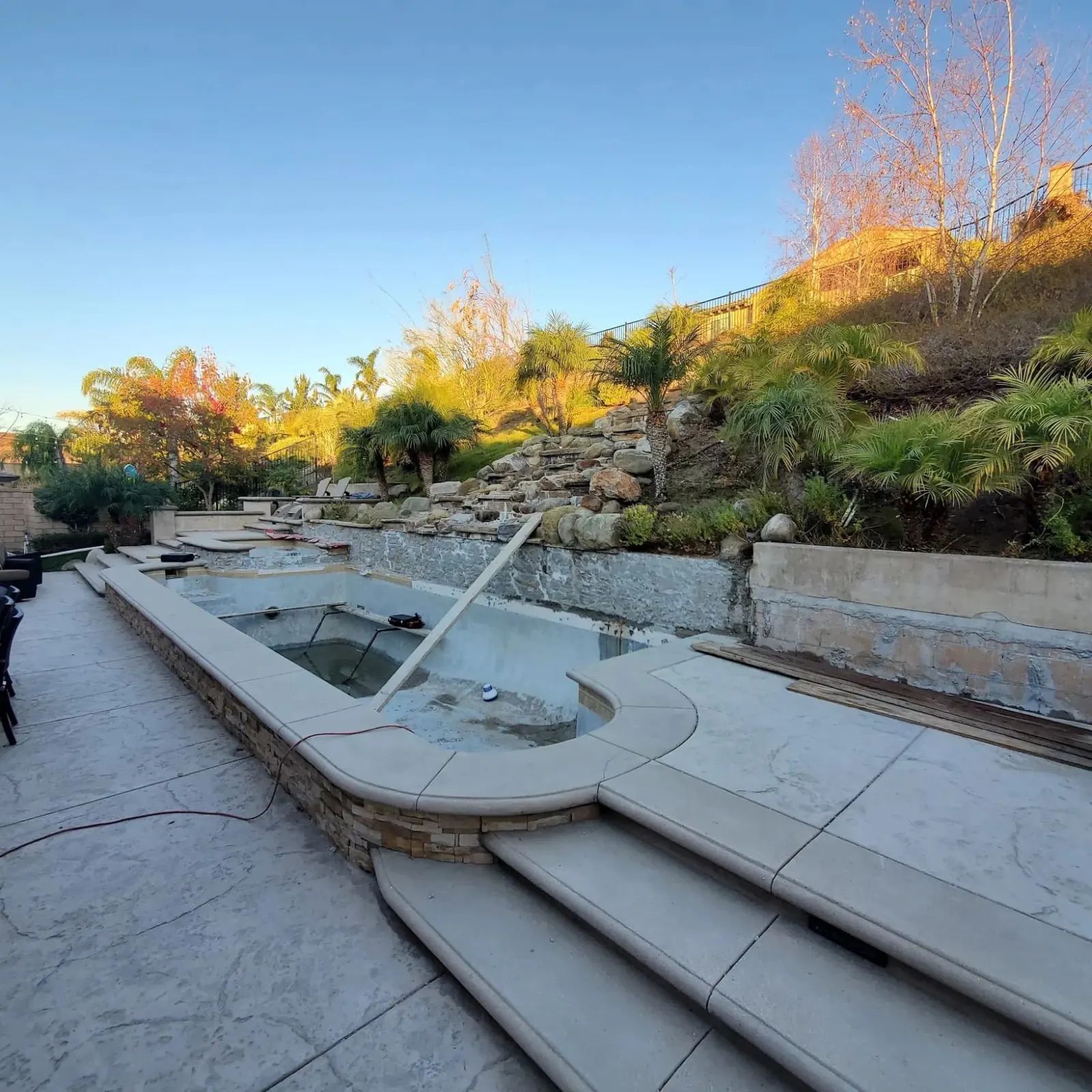
Breaking a slope into terraces interrupts the continuous fuel face, gives you level bands where non-combustible surfaces can be placed, and at the same time solves the erosion and drainage problems that a bare slope creates in the first winter after a fire. On these lots the retaining structure and the fire strategy are the same construction.
It is expensive, and it is the one place where fire work and the thing that makes a hillside garden usable are genuinely the same money.
Access is part of the design
On a hillside property, whether a fire crew can get equipment to the downhill side, and whether there is anywhere to stand, is part of what the landscape decides. A plan that walls off the only route down the slope has made a choice about that, whether or not anybody noticed making it.
Questions people actually ask
Do I need more clearance because I am on a slope?
Often, yes. Slope and exposure are among the factors local fire authorities weigh, and requirements can exceed the general baseline. It is an address-specific question for your fire authority rather than one a general article can answer.
What about erosion if I clear the slope?
It is a real risk and it is the reason clearing is not the same as scraping. Root structure holds a slope, so the work is thinning, spacing and removing dead material rather than stripping it bare, and terracing is what makes heavier intervention safe.
Is the uphill side of the property less important?
Less urgent, not unimportant. Embers arrive from any direction on the wind, and Zone 0 against the structure matters equally on every side.
Sources
Sources: CAL FIRE, Defensible Space, California Public Resources Code section 4291, Los Angeles County Fire Department. Requirements change and vary by address. Confirm yours with your local fire authority before relying on anything here.
The rest of the guide
Fire-resilient landscape design, one question per page.
- Fire-Resilient Landscape Design: the complete guideThe hub page: what it is, the zones, and what it changes on a property.
- Zone 0: the first five feetThe smallest zone, the one that costs a garden the most, and the one nearly everybody gets wrong.
- Plant selection and spacingThere is no fireproof plant. There are plants that are badly placed, badly spaced and badly maintained, and those are the ones that carry fire.
- Hardscape as a firebreakA path is not automatically a firebreak. Width, continuity and what sits either side of it decide whether it does anything at all.
- Irrigation and fuel moistureThe moisture in a living plant in September is a design outcome, decided by a controller somebody set in July.
- Insurance and HOA inspectionsWe can build a landscape that meets what an inspection asks for. We cannot promise you a policy, and anybody who does is not in a position to.
- The maintenance calendarEverything built on the rest of this site stops working within two seasons if nobody clears it.
- Rebuilding after a fireThe ground is not the ground it was. Putting the old garden back on it is how the second problem starts.
- Cost and sequencingAlmost nobody does the whole property in one go. The order you do it in changes how much protection you have bought at every point along the way.
- Rebuilding in Malibu and the canyonsWhat the ground needs before anything is planted, and why the garden is the last stage rather than the first.
- Where this falls shortThis is the page most companies in our position do not write. It is here because the alternative is letting somebody believe a garden will save a house.
Tell us about the property
Send a few lines about what you have and what you want. We will tell you what we think it takes, what order it should happen in, and whether we are the right company for it.